
Appliance
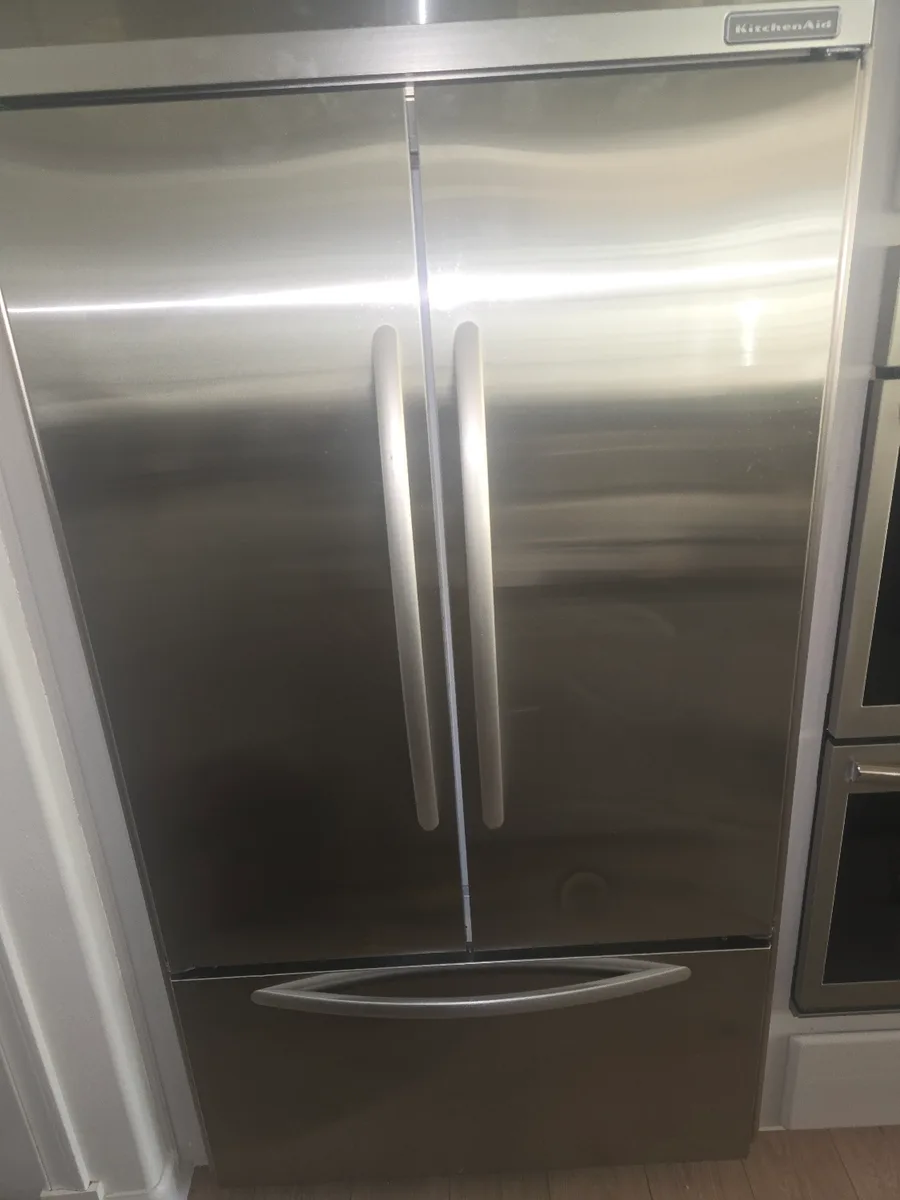
KitchenAid Built-In
Fault
Sealed system failure
Location
Paradise Valley
Resolved
2 business days
Built-in KitchenAid fridge losing its charge
A slow sealed-system leak on a built-in refrigerator — the kind of drift that gets blamed on the thermostat until someone actually checks pressures.
The Call
What We Hear
It's running warmer than it used to, gradually, and the compressor never seems to stop.
A common way this fault gets described to us
KitchenAid built-in — sealed system check
Ruling out the cheap causes before touching refrigerant.
Sealed refrigerant system
Below spec — confirmed leak
Door seals
Full contact, no gaps
Condenser airflow
Clear, no restriction
Compressor
Running within spec once recharged
Severity Assessment
UrgentVisit Timeline
How It Went
Call received
Symptoms taken
Gradual warm drift reported — the pattern that usually points at the sealed system rather than a control part.
On site
Sealed-system pressures checked
Confirmed low charge before ruling out the door seals and condenser.
Parts confirmed
Built-in spec parts ordered
Return date given on the first visit rather than an open-ended wait.
DATE GIVEN UP FRONTReturn visit
Repaired and tested
System repaired, evacuated, recharged, and monitored through a full pull-down before sign-off.
2 BUSINESS DAYS · CALL TO FIXEDDiagnostic Sequence
What We Tested
Sealed system pressures
Below spec — confirms a leak, not a control fault
Door seals and alignment
Sealing correctly around the full perimeter
Condenser coil and airflow
Clear, no restriction
Evaporator fan
Running at rated speed
Defrost cycle and heater
Terminating on schedule, no ice buildup
Compressor amperage and start
Starting clean once system was recharged
The Diagnosis
What Was Actually Wrong
Root Cause
Slow refrigerant leak in the sealed system
A sealed system that’s losing its charge shows up as a gradual drift, not a sudden stop — the compressor keeps running because it’s trying to compensate for the shortfall, which is why it never seems to cycle off.
Everything else on this unit — door seals, condenser, evaporator fan, defrost cycle — checked out fine. Isolating the leak and confirming it before opening the system is what keeps this from turning into a guess-and-replace job.
Repair Path
How We Fixed It
Step 01
System recovered and isolated
Refrigerant recovered per EPA handling requirements before any line work started.
Step 02
Leak repaired
Line repaired at the leak point, joint pressure-tested to confirm the seal held.
Step 03
System evacuated and recharged
Pulled to a full vacuum and recharged to the manufacturer’s exact spec.
FACTORY CHARGE SPECStep 04
Cooling verified
Cabinet monitored through a full pull-down cycle before sign-off.
VERIFIED, NOT ASSUMEDOutcome
Result
Resolved
2 business days
Parts replaced
1
Return visits
None
Cooling
Verified
If This Is Happening To You
Sealed system failure?
Compressor never cycles off?
That’s usually the system fighting a shortfall, not a sign the compressor itself is failing.
Getting worse over weeks?
A slow slide is the signature of a small leak, not a sudden part failure — worth a pressure check first.
Check the door seal yourself
A dollar-bill test around the full perimeter rules this out in under a minute, free.
Built-ins use spec parts
Tell us the model number on the call so the right part can be ordered before the first visit ends.
Sealed-system work on a built-in takes longer than a bolt-on part, but it is still almost always the right call over replacement — see our repair-or-replace guide.
Dealing with something similar? See our refrigerator repair page for pricing, symptoms and same-day availability.
Dealing with something similar on your refrigerator (built-in)?
Call the Team NowSimilar problem?
Fixed by tonight.
Call before 4 PM and we come out the same day.